
A Comprehensive Guide to Modern Fire Protection

In the blink of an eye, a small spark can escalate into a raging inferno, threatening lives, devastating property, and shattering futures. The destructive power of fire is immense, but equally potent is the human ingenuity dedicated to countering it. Fire protection is not a singular product or service; it’s a meticulously engineered ecosystem of systems, strategies, and protocols designed to prevent fires, detect them early, contain their spread, and suppress them effectively. It’s an invisible shield, constantly vigilant, working silently in the background to safeguard every structure, every asset, and every individual within our communities.
This comprehensive article delves into the multifaceted world of modern fire protection. We will explore its foundational principles, the essential components that comprise a robust safety strategy, the critical importance of integrating both active and passive measures, and why a holistic, professional approach is paramount for ensuring compliance, resilience, and unparalleled peace of mind in any commercial, industrial, or residential environment.
Beyond Extinguishers: Understanding the Pillars of Fire Protection
Effective fire protection is built upon several interconnected pillars, working in concert to create a comprehensive safety net. These generally fall into two broad categories:
1. Passive Fire Protection (PFP): Containing the Threat
Passive fire protection refers to elements incorporated into the building’s structure to contain a fire or slow its spread. These features are built into the building itself and don’t require activation by detection.
- Fire-Rated Walls, Floors, and Ceilings: Constructed with materials designed to resist fire for a specified duration (e.g., 1-hour, 2-hour rating). These create fire compartments, limiting the fire’s ability to move from one area to another.
- Fire Doors and Fire Dampers: Specialized doors and dampers that automatically close or activate upon fire detection, maintaining the integrity of fire-rated barriers in walls and ducts, preventing the spread of fire and smoke.
- Fire-Resistant Materials: Use of non-combustible or fire-retardant materials for structural elements, insulation, and finishes.
- Compartmentation: Dividing a building into smaller fire-resistant zones to restrict fire and smoke to its area of origin, allowing occupants time to evacuate and firefighters to gain control.
- Structural Fire Protection: Applying fire-resistive coatings or encasements to structural steel to prevent it from reaching critical temperatures and losing strength during a fire.
- Egress Pathways: Clearly defined and protected escape routes (corridors, stairwells) that allow occupants to exit the building safely, often incorporating fire-rated construction and emergency lighting.
PFP is the backbone of fire safety, providing crucial time for active systems to engage and occupants to evacuate.
2. Active Fire Protection (AFP): Detecting and Suppressing the Blaze
Active fire protection systems require some form of action or activation to detect a fire, alert occupants, and/or suppress the blaze. These are the dynamic components that spring into action during an incident.
- Fire Detection Systems (Fire Alarms):
- Initiating Devices: Smoke detectors (ionization, photoelectric, aspirating), heat detectors, flame detectors, carbon monoxide detectors, and manual pull stations that detect fire or its byproducts.
- Fire Alarm Control Panel (FACP): The “brain” that processes signals, activates alarms, and notifies monitoring stations.
- Notification Appliances: Horns, strobes, and voice evacuation systems that alert occupants to the danger.
- Monitoring: Connection to a central station that dispatches emergency services.
- Fire Suppression Systems:
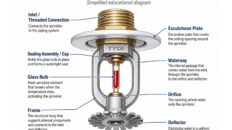
- Fire Sprinkler Systems: Networks of pipes and heat-activated sprinkler heads that automatically discharge water directly onto a fire’s origin (wet pipe, dry pipe, pre-action, deluge systems).
- Standpipe Systems: Vertical piping systems in buildings with hose connections on each floor, providing firefighters with a direct water source.
- Fire Pumps: Boost water pressure and flow to fire sprinkler and standpipe systems when the municipal supply is insufficient.
- Special Hazard Suppression Systems: Non-water-based systems for specific environments (e.g., data centers, kitchens, industrial processes).
- Clean Agent Systems: (e.g., FM-200, Novec 1230) Use inert gases or chemical agents that suppress fire without damaging sensitive equipment, leaving no residue.
- CO2 Systems: Use carbon dioxide to displace oxygen, primarily for enclosed spaces with specific hazards.
- Wet Chemical Systems: Specifically designed for Class K (cooking oil) fires in commercial kitchens.
- Dry Chemical/Dry Powder Systems: For industrial hazards involving flammable liquids or combustible metals.
- Portable Fire Extinguishers: Hand-held devices that allow occupants to actively fight small fires in their incipient stage (Class A, B, C, D, K types).
The Synergy of Systems: A Holistic Approach
The most effective fire protection strategies integrate both passive and active measures. PFP provides the containment and structural integrity, while AFP provides the early warning and direct suppression. For example:
- Fire-rated walls (PFP) slow a fire’s spread, giving the sprinkler system (AFP) time to activate and suppress it within that compartment.
- A smoke detector (AFP) detects smoke, activating fire dampers (PFP) in the HVAC system to prevent smoke circulation, simultaneously sounding an alarm (AFP) for evacuation.
This holistic approach ensures redundancy and layers of defense, maximizing safety and minimizing loss.
The Essential Process: Design, Installation, Testing, and Maintenance
Achieving comprehensive fire protection is a continuous journey that spans the entire lifecycle of a building:
- Professional Design & Engineering:
- Hazard Assessment: Identifying all potential fire risks, building materials, and occupancy types.
- Code Analysis: Deep understanding and application of international, national (NFPA), state, and local fire codes and building regulations.
- System Selection: Choosing the appropriate fire alarm, sprinkler, and other suppression systems based on the hazard, building type, and code requirements.
- Hydraulic & Electrical Calculations: Precise calculations for water flow, pressure, electrical loads, and circuit integrity.
- Blueprint Integration: Creating detailed plans that integrate seamlessly with architectural, structural, mechanical, and electrical drawings.
- Permitting: Preparing and submitting comprehensive plans to the Authority Having Jurisdiction (AHJ) for approval.
- Expert Installation:
- Certified Technicians: Installation performed by highly skilled, licensed, and certified professionals (e.g., NICET-certified for fire alarm and water-based systems).
- Quality Materials: Using only approved, listed, and high-quality components and materials that meet industry standards.
- Precision & Adherence: Strict adherence to engineered plans, manufacturer specifications, and code requirements during all phases of installation (piping, wiring, device placement, panel programming).
- Coordination: Seamless collaboration with other trades during construction to avoid conflicts and ensure timely completion.
- Rigorous Inspection, Testing, and Maintenance (ITM):
- Ongoing Vigilance: Fire protection systems require continuous inspection, testing, and maintenance to ensure they remain fully operational and compliant. These are not “set it and forget it” systems.
- NFPA 25 & NFPA 72: Adherence to NFPA 25 (for water-based systems) and NFPA 72 (for fire alarms) is paramount, dictating the frequency and scope of ITM activities.
- Scheduled Inspections: Regular visual checks (monthly, quarterly, semi-annually, annually) of all components for damage, obstructions, correct positioning, and proper function.
- Performance Testing: Periodic functional tests (e.g., main drain tests for sprinklers, sensitivity tests for smoke detectors, full-flow tests for fire pumps) to verify actual system performance.
- Preventative Maintenance: Proactive servicing, cleaning, lubrication, and component replacement to prevent failures and extend system lifespan (e.g., battery replacement, detector cleaning, valve exercising).
- Detailed Documentation: Meticulous record-keeping of all ITM activities, deficiencies found, and corrective actions taken, crucial for compliance, insurance, and system history.
- Prompt Repairs:
- Rapid Response: Addressing any identified deficiencies or malfunctions immediately to restore full system functionality and compliance.
- Expert Troubleshooting: Diagnosing issues accurately and performing repairs with certified parts and techniques.
Why Professional Fire Protection is Non-Negotiable:
- Life Safety: The most critical reason. Properly designed, installed, and maintained systems save lives by providing early warning and effective suppression.
- Property Preservation: Minimizing fire damage, protecting assets, and reducing the financial impact of business interruption.
- Regulatory Compliance: Avoiding costly fines, legal liabilities, and operational shutdowns from the AHJ.
- Insurance & Financial Security: Ensuring valid insurance coverage, potentially lowering premiums, and protecting investments.
- Business Continuity: Maintaining a safe environment for employees and customers, ensuring operations can resume quickly after an incident.
- Peace of Mind: Knowing that your property is protected by a meticulously engineered and maintained safety net.
The Consequences of Neglect: A Dangerous Oversight
Underestimating or neglecting any aspect of fire protection can lead to catastrophic outcomes:
- Increased Risk of Fatalities and Injuries: The ultimate and most tragic consequence.
- Total Loss of Property: Fires can quickly overwhelm inadequate systems.
- Legal Liabilities: Property owners and managers can face severe legal and criminal penalties for negligence.
- Business Failure: Many businesses never recover after a major fire.
- Reputational Damage: A fire incident linked to safety failures can devastate a company’s public image.
Conclusion: Your Partner in Building a Safer Future
Fire protection is an ongoing commitment, a continuous investment in the safety and resilience of our built environment. It’s an intricate dance between passive containment and active suppression, orchestrated by dedicated professionals who understand the profound responsibility of their craft. From the initial spark of an idea for a new building to the daily vigilance in an existing structure, comprehensive fire protection is the invisible shield that empowers us to build, live, and work with confidence. Don’t compromise on this essential safeguarding; partner with experts who make safety their highest priority.
Is your property fully protected by an unyielding fire protection strategy? Don’t leave life and assets to chance. Contact us today for expert fire protection system design, professional installation, rigorous inspection, maintenance, and repair services tailored to your unique needs. Build a safer future, starting now!
Add comment