
And Why Expertise Matters

In the intricate tapestry of modern commercial building operations, few systems bear as profound a responsibility as the fire alarm system. It stands as the vigilant sentinel, the critical early warning, and the orchestrator of safe evacuation when fire threatens. Yet, behind this silent protector lies a complex web of design, engineering, and highly specialized installation. The question, “Who installs commercial fire alarm systems?” delves deeper than just finding a contractor; it uncovers a crucial ecosystem of expertise, certifications, and compliance that directly impacts the safety of occupants and the longevity of your business. This isn’t a job for a general electrician; it’s a domain demanding precision, adherence to stringent codes, and a deep understanding of life safety.
This article will meticulously unpack the various professionals and entities involved in the installation of commercial fire alarm systems. We’ll explore the roles, the necessary qualifications, the critical importance of choosing the right installer, and why expertise in this field is not just beneficial, but an absolute necessity for preventing catastrophic failures, ensuring regulatory compliance, and ultimately safeguarding lives and assets.
The Ecosystem of Expertise: Key Players in Fire Alarm Installation
Installing a commercial fire alarm system is not a solitary task. It’s a collaborative effort involving several highly specialized professionals and companies, each with a distinct role:
- Fire Alarm System Contractors/Companies (The Primary Installers):
- Who They Are: These are specialized firms whose core business is the design, installation, inspection, testing, and maintenance of fire alarm and related life safety systems. They are the frontline experts directly responsible for bringing the fire alarm system to life within your building.
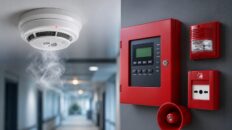
- Their Role in Installation: They employ the certified technicians who physically run wiring, mount devices (smoke detectors, pull stations, horns/strobes), connect them to the Fire Alarm Control Panel (FACP), program the FACP, and integrate the system with other building functions (e.g., HVAC shutdown, elevator recall). They manage the project from approved design to final commissioning.
- Key Qualifications:
- NICET Certification (National Institute for Certification in Engineering Technologies): This is the gold standard for fire alarm technicians. Levels I-IV signify increasing levels of expertise in fire alarm systems, covering design, installation, testing, and inspection. Many jurisdictions require NICET certification for individuals performing this work.
- State/Local Licensing: Fire alarm contractors must hold specific licenses issued by state and local authorities, often separate from general electrical licenses.
- Manufacturer Training: Technicians are often trained and certified by specific fire alarm control panel manufacturers (e.g., Siemens, Notifier, Honeywell, EST) to install and program their proprietary systems.
- Understanding of NFPA 72: Deep knowledge of NFPA 72 (National Fire Alarm and Signaling Code) is fundamental, as it dictates the minimum requirements for design, installation, inspection, testing, and maintenance.
- Licensed Electricians (Supporting Role, Often Subcontracted):
- Who They Are: General electricians are licensed professionals who specialize in electrical wiring and power distribution within buildings.
- Their Role in Installation: While they typically don’t install the specialized fire alarm devices or program the FACP, they often play a crucial supporting role. This includes running the primary power feed to the FACP, installing dedicated circuits for the fire alarm system, and ensuring that all electrical connections meet local electrical codes (NEC – National Electrical Code). In some smaller, less complex systems, a licensed electrician with additional fire alarm specific training/certification might perform more of the installation. However, for most commercial systems, the specialized fire alarm contractor handles the life safety circuitry.
- Key Qualifications: State-issued electrical licenses (journeyman, master electrician).
- Fire Protection Engineers (FPEs) or Consulting Firms (Design Phase):
- Who They Are: Highly specialized engineers with expertise in fire science, fire behavior, and the design of active and passive fire protection systems.
- Their Role in Installation: While they don’t physically install the system, FPEs are critical during the design phase. They conduct thorough hazard assessments, perform code analysis, develop the detailed fire alarm system design drawings, performance specifications, and sequences of operation. These designs are then used by the fire alarm contractor for installation. For complex projects, their involvement is non-negotiable.
- Key Qualifications: Professional Engineering (PE) license with a specialization in Fire Protection Engineering.
- Authority Having Jurisdiction (AHJ) – Fire Marshal’s Office/Building Department:
- Who They Are: These are the governmental bodies responsible for enforcing fire codes and building regulations.
- Their Role (Oversight, Not Installation): The AHJ reviews the fire alarm system design plans (submitted by the FPE or fire alarm contractor) for code compliance, issues permits for installation, conducts intermediate inspections during the installation process, and performs the crucial final acceptance testing to ensure the system is installed correctly and functions as per code before granting occupancy. They are the ultimate approvers.
Why You Can’t Just “Hire Any Electrician”: The Criticality of Specialization
The distinction between a general electrician and a fire alarm system installer is paramount. While both deal with electrical circuits, the intricacies of fire alarm systems demand a different level of specialization and certification:
- Life Safety vs. Convenience: Fire alarm systems are life safety systems. A failure in a fire alarm system can directly lead to injury or death. General electrical systems primarily focus on power delivery for convenience and basic functionality.
- NFPA 72 vs. NEC: General electricians are experts in the National Electrical Code (NEC). Fire alarm installers are experts in NFPA 72 (National Fire Alarm and Signaling Code), which is a distinct and highly specialized code dictating every aspect of fire alarm system design, installation, and operation. While the NEC applies to the power wiring to the FACP, NFPA 72 governs the entire fire alarm system circuitry and functionality.
- System Integration & Logic: Fire alarm systems are complex integrated networks. They involve sophisticated logic (e.g., cross-zoning, pre-alarm, supervisory signals), intricate programming of the FACP, and interfacing with other building systems (HVAC, elevators, access control). This requires specialized knowledge beyond standard electrical wiring.
- Detection & Notification Science: Fire alarm installers understand the science of smoke and heat detection, proper placement to avoid false alarms while ensuring effective coverage, acoustics for notification appliances, and intelligibility for voice evacuation systems.
- Testing & Commissioning: Fire alarm systems require specific, multi-stage testing and commissioning procedures that are unique to life safety systems, far more rigorous than typical electrical circuit testing.
The Installation Process: A Multi-Stage Journey to Safety
The installation of a commercial fire alarm system is a structured process, typically involving these key stages:
- Design & Permitting:
- Based on building occupancy, size, layout, and specific hazards, a qualified FPE or fire alarm contractor develops detailed system designs.
- These plans are submitted to the AHJ for review and approval, leading to the issuance of an installation permit.
- Rough-In Installation (Wiring & Conduit):
- Once permits are secured, technicians (often the fire alarm contractor’s team) begin installing the wiring and conduit throughout the building. This includes pathways for initiating device circuits, notification appliance circuits, and communication lines.
- Careful coordination with other trades (HVAC, plumbing, electrical) is crucial at this stage to avoid conflicts in ceiling plenums and wall spaces.
- Device Installation & Panel Mounting:
- After rough-in, the physical devices are installed: smoke detectors, heat detectors, manual pull stations, horns, strobes, speakers, and the main Fire Alarm Control Panel (FACP) itself.
- Proper mounting heights, clearances, and adherence to design specifications are critical.
- Wiring Termination & Connection:
- All wiring is meticulously terminated at each device and connected back to the FACP. This requires precision to ensure proper connectivity and prevent short circuits or open circuits.
- System Programming:
- The FACP is programmed according to the approved sequence of operations. This involves defining zones, assigning addresses to devices (for addressable systems), configuring alarm activation logic, setting up supervisory signals, and programming interfaces with other building systems.
- Pre-Commissioning Testing:
- Before final acceptance, the installer conducts extensive internal testing to ensure every device communicates correctly, all circuits are functional, and the programming performs as expected. This helps identify and correct issues before the AHJ inspection.
- Final Acceptance Testing (AHJ Witnessed):
- This is a critical milestone. A certified fire alarm technician, often accompanied by representatives from the building owner and the central monitoring station, performs a comprehensive test of the entire system, witnessed by the AHJ (e.g., fire marshal). Every device is activated, every notification appliance is checked, and all system integrations are verified.
- Upon successful completion, the AHJ provides final approval and the Certificate of Occupancy can be issued.
- Monitoring Connection:
- The system is connected to a central monitoring station that receives alarm signals 24/7 and dispatches emergency services.
Choosing the Right Fire Alarm Installer: A Non-Negotiable Decision
Given the life-safety implications, selecting the right fire alarm installation company is paramount. Here’s what to look for:
- Licensing & Certification: Verify that the company holds all necessary state and local licenses for fire alarm installation. Crucially, ensure their technicians are NICET-certified for fire alarm systems (Levels II, III, or IV are ideal for commercial projects).
- Experience & Reputation: Choose a company with a proven track record of successfully installing commercial fire alarm systems similar in scope and complexity to yours. Ask for references and review their portfolio.
- Comprehensive Services: Ideally, select a firm that offers end-to-end services: design, installation, inspection, testing, monitoring, and maintenance. This ensures consistency and accountability.
- Manufacturer Expertise: Ensure they are authorized dealers or certified installers for the fire alarm panel manufacturer you’ve chosen or are considering.
- Code Knowledge: They must demonstrate an in-depth understanding of NFPA 72, local building codes, and the specific requirements of your AHJ.
- 24/7 Support & Monitoring: After installation, ongoing support for maintenance, repairs, and central station monitoring is essential.
- Clear Communication & Documentation: A professional installer provides detailed proposals, transparent pricing, comprehensive installation schedules, and thorough “as-built” documentation.
- Insurance: Verify they carry adequate liability insurance.
Consequences of Choosing the Wrong Installer:
- Non-Compliance & Delays: Incorrect installation leads to failed inspections, project delays, significant fines, and potential occupancy permits being withheld.
- System Malfunctions & False Alarms: Poor wiring, improper device placement, or incorrect programming can lead to frequent false alarms (causing “alarm fatigue” and fire department fines) or, worse, failure to detect a real fire.
- Compromised Life Safety: The most severe consequence. A poorly installed system fails to provide adequate warning, directly endangering occupants’ lives.
- Increased Liability: Building owners face significant legal liability if a fire incident occurs and the fire alarm system is found to be non-compliant or improperly installed.
- Costly Rework: Fixing a faulty system after installation is exponentially more expensive and disruptive than doing it right the first time.
- Insurance Issues: Invalidated warranties, higher premiums, or denial of claims in the event of a fire.
Conclusion: Your Investment in Unwavering Safety
The installation of a commercial fire alarm system is far more than a construction task; it’s a critical investment in unwavering safety, regulatory compliance, and peace of mind. The “who” behind this installation matters immensely. By choosing highly specialized, certified, and experienced fire alarm professionals, you’re not just getting wires and devices; you’re securing a meticulously engineered life safety system designed to be your building’s most reliable guardian. Don’t compromise on expertise when it comes to the system that protects every life and asset within your walls.
Ready to safeguard your commercial property with a flawlessly installed fire alarm system? Don’t settle for less than specialized expertise. Contact us today for professional fire alarm system design, expert installation by NICET-certified technicians, and comprehensive ongoing support. Ensure your building’s lifeline is strong, reliable, and ready to protect!
Add comment