
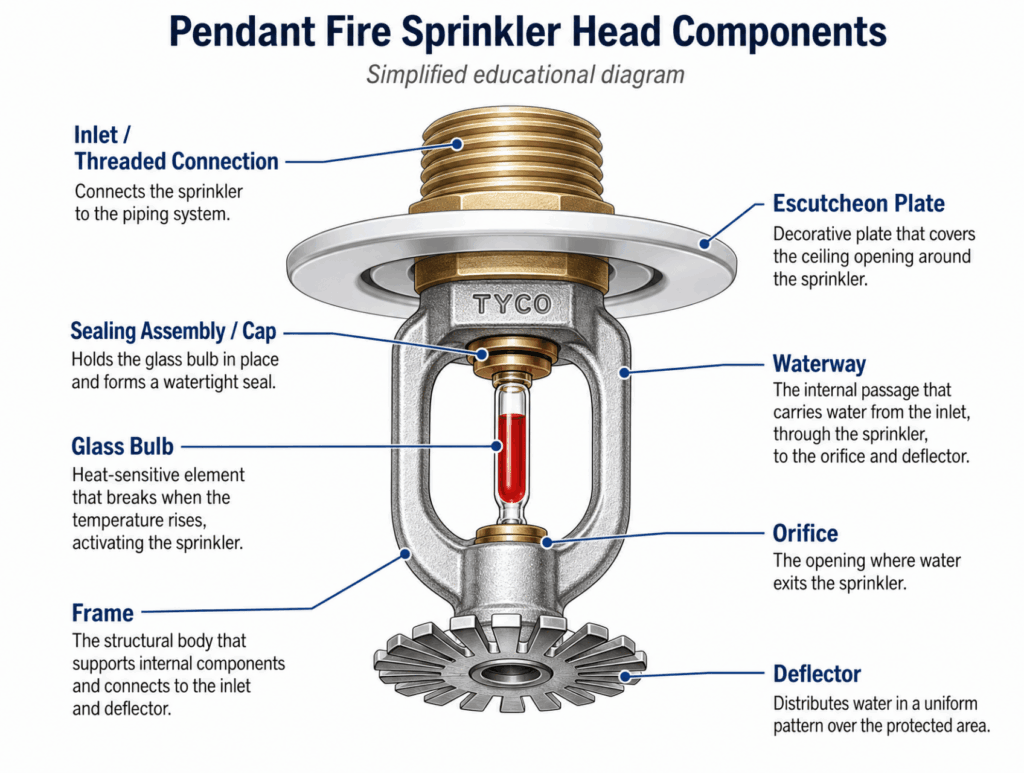
Fire sprinklers are designed to respond automatically when a fire produces enough heat to activate a sprinkler head. Each sprinkler head contains a heat-sensitive element, typically a glass bulb or fusible link, that holds water back inside the piping system.
When a fire starts, heat rises and collects near a fire sprinkler. If the temperature around the nearest sprinkler head reaches its rated activation point, that heat-sensitive element breaks or releases, allowing water to flow through the sprinkler head and disperse over the fire. Once activated, the sprinkler releases water directly over the fire area to help control or contain the flames before they can spread.
Fire sprinklers operate individually, not all at the same time. In most fire events, only the sprinkler head closest to the fire activates first because only that head has reached the necessary activation temperature. Other fire sprinklers remain closed unless the fire grows enough and the heat generated activates additional sprinklers. This keeps water discharge contained to the fire area where it is needed.
Fire sprinklers work well because they respond early, often before the fire can spread beyond the room where it started. National Fire Protection Agency reports that in structure fires large enough to activate sprinklers, the systems operated in 92% of cases and were effective in controlling the fire in 97% of those incidents. In reported home fires where sprinklers were present, civilian death rates were 89% lower and average property loss was 55% lower than in homes without sprinklers.
The speed, reliability, and targeted response of fire sprinklers make them one of the most effective tools available for fire protection. If you have questions about fire sprinkler installation, inspections, testing, or service, contact a qualified fire sprinkler professional for guidance specific to your property.

Add comment