
Key Differences Between Smoke Detectors and Fire Alarm Systems
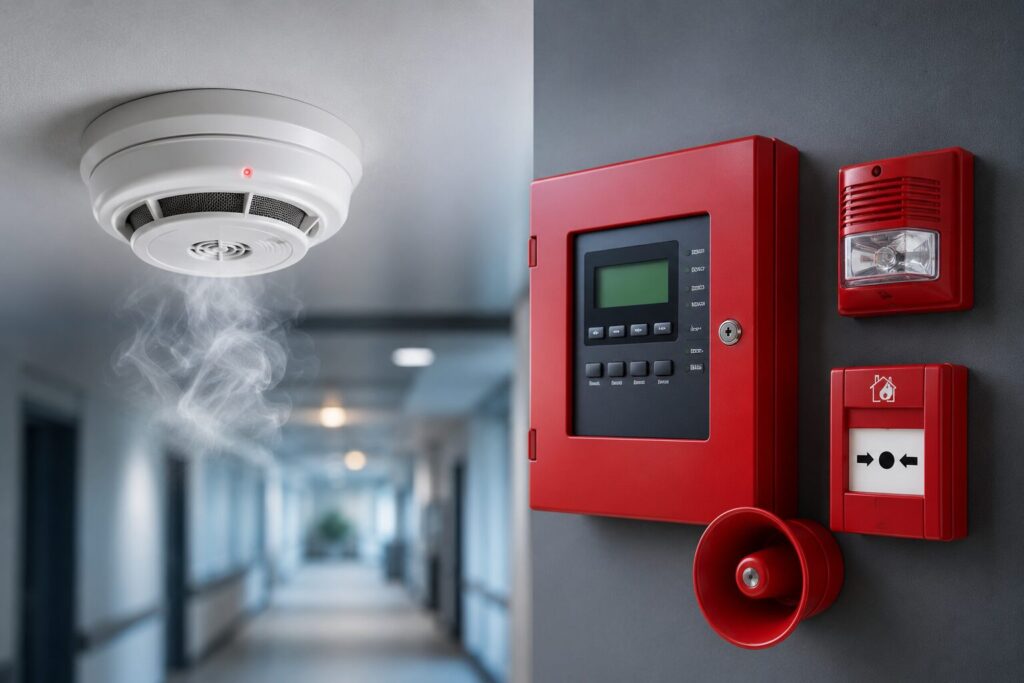
When it comes to fire safety, many people use the terms smoke detector and fire alarm interchangeably. While these devices work together to protect lives and property, they are not the same thing.
Understanding the difference between a smoke detector and a fire alarm is essential for homeowners, business owners, property managers, and facility operators who want to maintain code compliance and ensure the highest level of fire protection.
In this guide, we’ll explain how smoke detectors and fire alarm systems work, their primary functions, where they are used, and why both play critical roles in fire safety.
What Is a Smoke Detector?
A smoke detector is a device designed to detect the presence of smoke, which is often one of the earliest signs of a fire.
Its primary purpose is to identify smoke particles in the air and initiate an alarm or signal when smoke reaches a predetermined threshold.
Smoke detectors are commonly found in:
- Homes
- Apartments
- Hotels
- Offices
- Schools
- Healthcare facilities
- Industrial buildings
Smoke detectors act as the “sensing” component of a fire protection system.
Types of Smoke Detectors
Ionization Smoke Detectors
Ionization detectors are highly sensitive to fast-flaming fires that produce small combustion particles.
These detectors are commonly used in residential applications and can provide early warning during rapidly developing fires.
Photoelectric Smoke Detectors
Photoelectric detectors are more responsive to slow-smoldering fires that generate larger smoke particles.
They are commonly installed in:
- Bedrooms
- Hallways
- Office spaces
- Healthcare facilities
- Commercial buildings
Many fire safety professionals recommend photoelectric technology because it often reduces nuisance alarms while providing effective early detection.
Dual-Sensor Smoke Detectors
Dual-sensor units combine ionization and photoelectric technologies to provide broader fire detection capabilities.
These devices offer enhanced protection against a variety of fire conditions.
What Is a Fire Alarm?
A fire alarm is a complete system designed to detect, notify, and respond to fire-related emergencies.
While smoke detectors may be part of a fire alarm system, the system itself includes many additional components that work together to protect occupants and property.
A fire alarm system may include:
- Smoke detectors
- Heat detectors
- Manual pull stations
- Alarm control panels
- Notification appliances
- Horns and strobes
- Emergency communication systems
- Supervisory devices
- Monitoring equipment
The fire alarm system acts as the “brain” of the operation by receiving signals from detection devices and initiating appropriate responses.
The Main Difference Between a Smoke Detector and a Fire Alarm
The simplest way to understand the difference is:
A smoke detector detects smoke, while a fire alarm system manages the entire emergency response process.
Think of a smoke detector as a sensor and a fire alarm as the complete network that receives information from multiple sensors and alerts building occupants.
Smoke Detector
- Detects smoke
- Functions as a sensing device
- May operate independently
- Sends signals when smoke is present
Fire Alarm System
- Receives signals from detectors
- Activates audible and visual alarms
- Notifies occupants
- May alert emergency responders
- Can activate fire suppression systems
- Provides system monitoring and supervision
Can a Smoke Detector Work Without a Fire Alarm System?
Yes.
Many residential smoke detectors are standalone devices that operate independently.
When smoke is detected, the detector emits an audible alarm to warn occupants.
These units do not require a fire alarm control panel and are commonly installed in:
- Single-family homes
- Condominiums
- Small residential properties
However, standalone smoke detectors generally do not provide the advanced capabilities found in commercial fire alarm systems.
How Fire Alarm Systems Use Smoke Detectors
In commercial and industrial facilities, smoke detectors are often connected to a central fire alarm control panel.
When smoke is detected, the system can:
- Sound alarms throughout the building
- Activate emergency lighting
- Notify a monitoring center
- Alert the fire department
- Release magnetic door holders
- Control smoke management systems
- Shut down HVAC equipment
- Activate fire suppression systems
This integrated response helps reduce property damage and improve occupant safety.
Smoke Detectors vs. Fire Alarms in Commercial Buildings
Commercial properties are typically subject to stricter fire code requirements than residential buildings.
Most commercial facilities require professionally installed fire alarm systems that incorporate multiple detection methods.
Common commercial applications include:
Office Buildings
Fire alarm systems provide building-wide notification and monitoring capabilities.
Warehouses
Large facilities often use smoke detection, heat detection, and sprinkler monitoring devices.
Healthcare Facilities
Hospitals and medical centers require sophisticated fire alarm systems designed to protect vulnerable occupants.
Industrial Facilities
Manufacturing plants often utilize integrated fire alarm systems connected to suppression equipment and emergency controls.
Which Device Saves Lives Faster?
Both devices play essential roles in life safety.
A smoke detector provides early warning by identifying smoke at the earliest stages of a fire.
A fire alarm system expands that protection by notifying everyone in the building and coordinating emergency responses.
The combination of early detection and rapid notification offers the highest level of protection.
Fire Alarm Components Beyond Smoke Detection
Many people are surprised to learn that fire alarm systems monitor more than smoke.
Additional devices may include:
Heat Detectors
Heat detectors activate when temperatures reach a specified threshold.
Duct Smoke Detectors
Installed within HVAC systems to prevent smoke from spreading throughout a building.
Waterflow Switches
Monitor fire sprinkler system activation.
Supervisory Devices
Monitor valve positions, pressure levels, and system readiness.
Manual Pull Stations
Allow occupants to manually initiate an alarm.
Together, these devices create a comprehensive fire protection network.
Inspection and Maintenance Requirements
Regular inspections are critical to ensuring both smoke detectors and fire alarm systems remain operational.
Routine services may include:
- Visual inspections
- Functional testing
- Sensitivity testing
- Battery replacement
- Device cleaning
- Alarm verification
- System troubleshooting
Commercial fire alarm systems must typically undergo annual inspections and testing to maintain compliance with local fire codes and applicable standards.
Property owners should work with qualified fire protection professionals to ensure systems remain code-compliant and fully functional.
Common Misconceptions
“Smoke detectors and fire alarms are the same.”
False. Smoke detectors are individual detection devices, while fire alarms are complete systems.
“A smoke detector automatically contacts the fire department.”
Not necessarily. Standalone smoke detectors only provide local notification.
“Commercial buildings only need smoke detectors.”
Most commercial buildings require a comprehensive fire alarm system rather than standalone detectors.
“Fire alarms only detect smoke.”
Modern fire alarm systems monitor many types of fire and life safety conditions.
Why Professional Fire Protection Services Matter
Whether you’re managing a commercial facility, industrial plant, apartment complex, or residential property, professional inspection and maintenance services are essential.
Experienced fire protection contractors can provide:
- Fire alarm installation
- Smoke detector testing
- System inspections
- Code compliance evaluations
- Fire sprinkler inspections
- Emergency repairs
- Preventative maintenance programs
Regular service helps ensure your fire protection systems operate properly when every second counts.
Conclusion
While smoke detectors and fire alarms are closely related, they serve different functions within a fire protection strategy.
A smoke detector’s job is to identify smoke and initiate a signal, while a fire alarm system manages the broader emergency response by notifying occupants, monitoring conditions, and activating safety measures throughout a building.
Understanding this distinction helps property owners make informed decisions about fire safety, code compliance, and system maintenance. By combining reliable smoke detection with a professionally maintained fire alarm system, businesses and homeowners can significantly improve protection for lives, property, and operations.

Add comment