Backflow Preventer Service
Backflow preventer service is essential for protecting your potable water supply from contamination caused by reverse water flow. When a backflow preventer is not installed correctly, tested regularly, or maintained properly, non-potable water can move into clean water lines and create serious health, safety, and compliance concerns.
At Fire Sprinklers and Fire Alarms, we provide backflow preventer service in Las Vegas, Henderson, North Las Vegas, Clark County, and Greater Southern Nevada. Our team supports commercial, industrial, multi-family, and fire protection-related properties with backflow preventer installation, testing, inspection, maintenance, and repair services designed to help keep water systems protected and compliant.
Whether you need annual testing, a new assembly installation, repairs after a failed test, or recurring service support for a fire protection connection, we can help. Request a Quote to get started.
What Is Backflow Preventer Service?
Backflow preventer service includes the work required to keep backflow prevention assemblies functioning correctly. These devices are designed to stop contaminated or non-potable water from flowing backward into the potable water supply through a cross-connection or pressure imbalance.
In many commercial and fire protection applications, cross-connections are unavoidable. Fire sprinkler systems, irrigation systems, boilers, and certain industrial or commercial equipment all create conditions where water could potentially reverse direction if the proper protection is not in place. That is why backflow preventers are so important.
Backflow preventer service helps make sure the assembly installed on the system is appropriate for the hazard involved, operating correctly, and maintained over time. This service is not only about mechanical function. It is also about public health, property compliance, and responsible management of a building’s water and fire protection systems.
Why Backflow Prevention Matters
Under normal conditions, clean water flows in one direction through the water supply system. Backflow occurs when that flow reverses and allows non-potable water, chemical-treated water, or contaminated water to move into the clean supply. That reversal can happen through backpressure or backsiphonage, and the risks can be significant.
In a fire protection setting, this matters because sprinkler systems and related fire lines may contain stagnant water or treated water that should never enter the potable water supply. In other commercial settings, irrigation systems, boilers, kitchens, and specialized equipment can create similar risks.
That is why backflow preventer service is a key part of both public health protection and code-conscious building operation. It helps protect occupants, building users, and the broader water system from avoidable contamination events.
Our Backflow Preventer Services
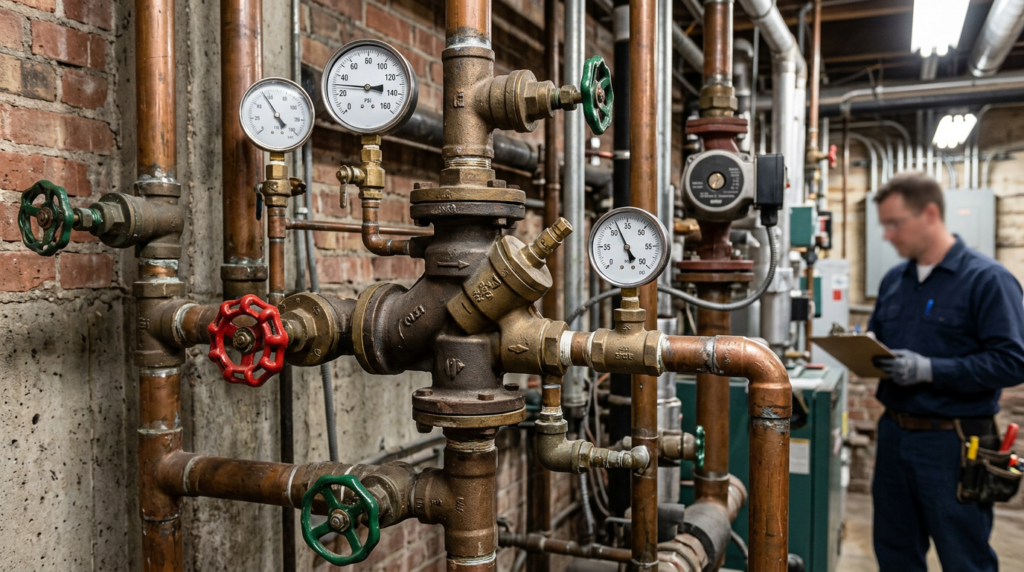
We provide a range of services designed to help customers install, maintain, test, and repair backflow prevention assemblies with attention to both fire protection and potable water safety.
Backflow Preventer Installation
Correct installation is the foundation of effective backflow prevention. We help ensure the right assembly is selected for the application and installed in a way that supports service access, testing, and long-term functionality.
Backflow Preventer Testing
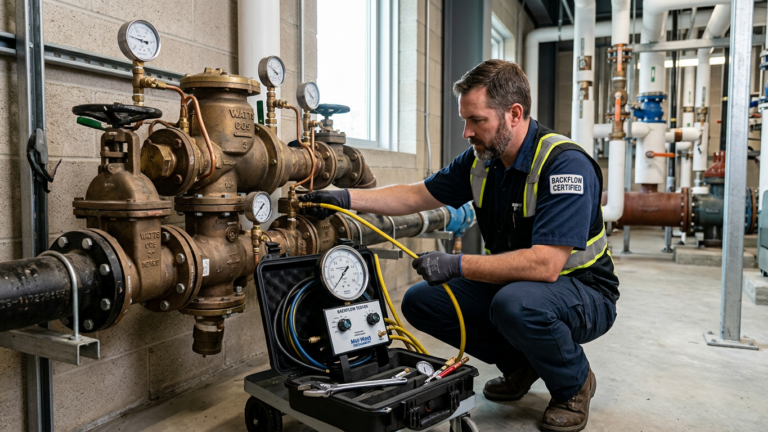
Testing is one of the most important parts of backflow preventer service. It helps verify that the assembly is functioning correctly and that the internal components are holding and responding as intended. Annual testing is often a critical part of staying compliant with local requirements.
Backflow Preventer Inspections
Inspections help identify visible issues, poor accessibility, signs of leakage, installation concerns, and conditions that may affect testing or operation. Inspections are also useful for understanding the current condition of older assemblies and determining whether repairs or replacement may be needed.
Backflow Preventer Maintenance
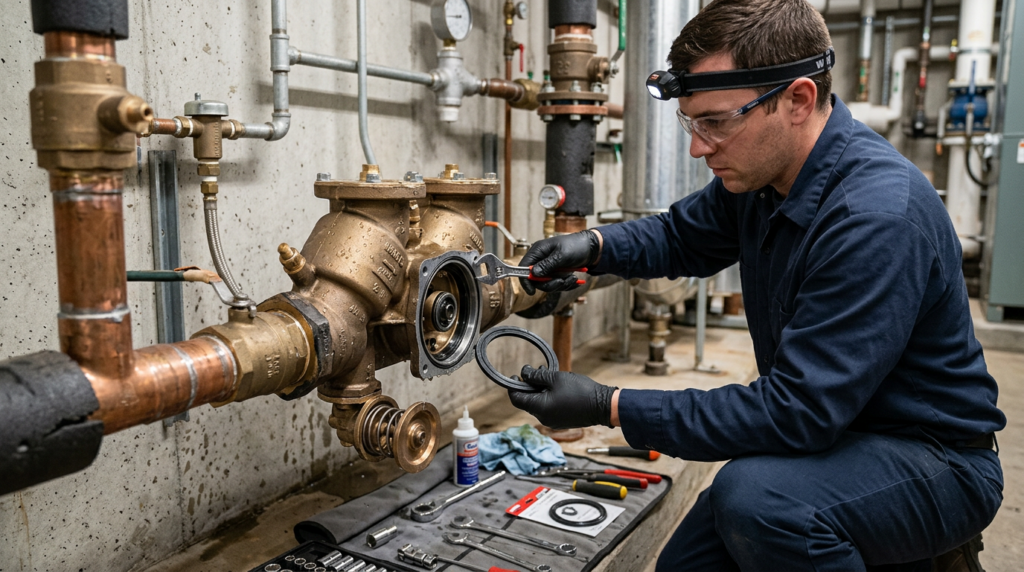
Maintenance helps preserve the performance of the assembly over time and reduce the chance of unexpected failure. This may involve servicing worn components, addressing leaks, and keeping the device in a condition that supports reliable testing and operation.
Backflow Preventer Repairs
When a backflow preventer fails testing or develops leaks, damaged parts, or mechanical issues, repairs should be handled quickly and correctly. Repair work is important not only for restoring performance, but also for reducing the risk of compliance problems or water contamination concerns.
Backflow and Fire Protection Systems
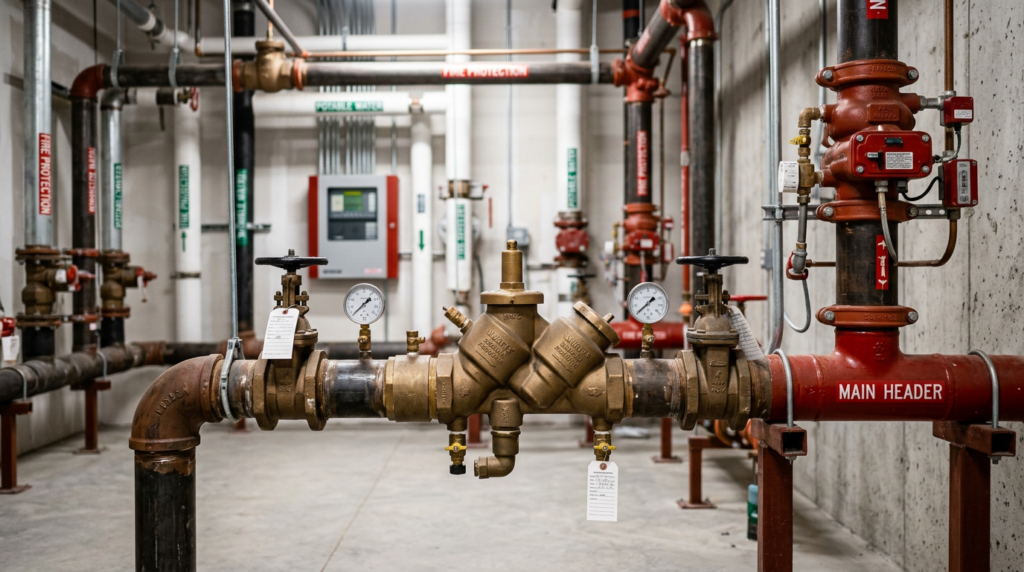
Backflow preventers are especially important in fire protection because fire sprinkler systems and related water-based suppression infrastructure often connect to the potable water supply. Those systems can contain stagnant water, corrosion control additives, or other conditions that make reverse flow unacceptable.
That is why backflow prevention assemblies are commonly installed on fire lines and fire protection connections. They help protect the clean water supply if pressure conditions change or if the fire protection side of the system creates a reverse-flow hazard.
Because of this relationship, backflow preventer service often works alongside fire sprinkler system service, fire pump service, and broader maintenance and repair services when customers need coordinated fire protection support.
What Causes Backflow?
Backflow can happen in two main ways, and understanding both helps explain why these devices are so important.
Backpressure
Backpressure occurs when the pressure on the non-potable side of the system becomes greater than the pressure on the potable side. This can force water in the wrong direction and create contamination risk at the cross-connection point.
Backsiphonage
Backsiphonage occurs when there is a drop in pressure on the potable water side, creating a vacuum-like effect that pulls water backward into the clean supply. This can happen when the system experiences unusual demand or other supply-side pressure changes.
Both situations can threaten water quality if an effective and properly maintained backflow prevention assembly is not in place.
Types of Backflow Preventers We Service
Different levels of hazard call for different assemblies. The correct device depends on the system application, the contamination risk, and the local requirements that apply to the property.
Double Check Valve Assembly (DCVA)
Double check valve assemblies are commonly used where the hazard level is lower and where protection against reverse flow is still necessary. These assemblies use multiple internal checks to help prevent backflow under normal service conditions.
Reduced Pressure Zone Assembly (RPZ)
Reduced pressure zone assemblies are often used where a higher level of protection is needed. These assemblies are designed for more hazardous applications and are a common choice in many commercial and fire protection-related settings where contamination risk is greater.
Pressure Vacuum Breakers and Related Devices
Some applications use vacuum breaker type devices or other forms of backflow prevention based on the specific system design and hazard involved. The right assembly depends on how the downstream system functions and what level of protection is required.
Backflow preventer service is not just about testing whatever device is already there. It is also about making sure the assembly type fits the application and risk level correctly.
Common Backflow Preventer Problems We Help Address
Backflow prevention assemblies can develop issues over time that reduce their reliability or cause them to fail required testing. One of the most important goals of ongoing service is identifying those issues before they create larger compliance or water quality concerns.
- Failed annual testing
- Leaks at the assembly or associated valves
- Worn internal components
- Poor accessibility for testing and service
- Improper installation or assembly selection
- Damage caused by weather, corrosion, or age
- Pressure-related problems affecting operation
- Assemblies that no longer match the hazard level of the site
Addressing these issues early helps restore device performance and reduce the chance of interrupted service, failed inspections, or contamination risk.
Why Annual Testing Matters
Annual testing is one of the most important parts of backflow preventer service because many issues cannot be confirmed through a simple visual check. A device may look normal from the outside while still having internal failures that prevent it from protecting the potable water supply correctly.
Testing helps verify that the assembly’s internal components are functioning as intended. It also provides documentation for compliance and helps property owners address problems before they become more serious. In many settings, annual testing is not just a good idea. It is a key part of meeting local regulatory requirements.
For customers who manage fire protection systems, this matters even more because the assembly often sits at the connection point between the potable water supply and the fire line. That is a critical location for both safety and compliance.
Our Process for Backflow Preventer Service
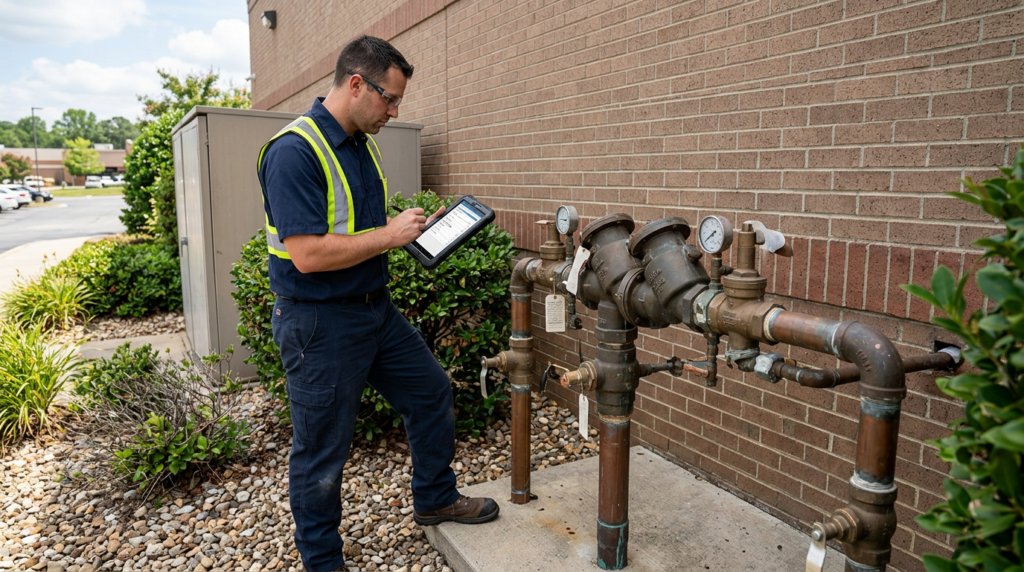
1. Review of the Property and Assembly Type
We begin by reviewing the property, the application involved, and the type of backflow prevention assembly installed. Some customers need routine annual testing. Others contact us because of a failed device, a new installation need, or a repair issue.
2. Inspection and Identification of Service Needs
Next, we identify what the system needs. That may include testing, maintenance, repair, replacement planning, or coordination with other fire protection and water-system components.
3. Service and Corrective Work
Our team performs the required backflow preventer service with attention to potable water protection, device performance, and code-conscious support. The goal is to help keep the assembly functioning properly and positioned for continued compliance.
4. Verification and Ongoing Support
After service is completed, we confirm the condition and next-step needs of the assembly. Many customers need recurring service support, especially where annual testing and fire protection system coordination are part of their compliance routine.
Related Fire Protection Services
Backflow preventer service often overlaps with other fire protection and water-based infrastructure services. Depending on the property, customers may also need private fire hydrant service, fire pump service, fire alarm system service, and fire extinguisher service.
If your project involves a new build or a change in layout, our new construction fire protection service and tenant improvement fire protection pages may also be relevant. For broader support, visit our all fire protection services page.
Code Compliance and Backflow Preventer Service
Backflow preventer service should always be handled with compliance and public health in mind. A failed or neglected assembly does more than create a mechanical issue. It can create a water safety concern that affects the property and, in some cases, the surrounding supply system.
Properties that neglect testing, repairs, or installation requirements may face failed inspections, water service complications, repair costs, and increased liability. For that reason, backflow preventer service should be treated as a critical building protection responsibility, not a minor plumbing detail.
For general information on the broader standards that influence water and fire protection design, installation, and service practices, the National Fire Protection Association provides an overview at NFPA Codes and Standards.
Who We Serve
Our backflow preventer service supports commercial properties, industrial sites, multi-family buildings, fire protection system owners, facility managers, and other property operators who need dependable protection for potable water connections.
We serve customers throughout Las Vegas, Henderson, North Las Vegas, Clark County, and Greater Southern Nevada. Whether you need annual testing, installation, maintenance, repair, or broader fire protection support, our team can help.
Why Choose Pipe Fitters Fire Protection?
Backflow prevention is one of the most important but least visible parts of building safety. It protects the water people rely on every day and plays a major role in fire protection system compliance where private fire lines are involved.
Our team focuses on practical backflow preventer service designed to help customers stay compliant, protect potable water quality, and reduce the risk of failed tests or assembly problems. We understand the importance of correct device selection, reliable testing, timely repairs, and long-term service support.
When your property depends on a backflow preventer to protect clean water from contamination, the goal is not only to have the device installed. It is to keep it functioning correctly year after year.
Frequently Asked Questions
What is backflow preventer service?
Backflow preventer service includes installation, testing, inspection, maintenance, and repair of assemblies that prevent contaminated water from flowing back into the potable water supply.
Why is backflow preventer testing important?
Backflow preventer testing helps verify that the assembly is working correctly and protecting the drinking water supply from backpressure or backsiphonage contamination.
How often should a backflow preventer be tested?
Backflow preventers are commonly tested annually, though requirements can vary based on local regulations, device type, and system application.
What types of backflow preventers do you service?
Service may include double check valve assemblies, reduced pressure zone assemblies, pressure vacuum breakers, and other devices depending on the property and hazard level.
Do you provide backflow preventer service in Las Vegas and nearby areas?
Yes. We serve Las Vegas, Henderson, North Las Vegas, Clark County, and Greater Southern Nevada.
Request a Quote for Backflow Preventer Service
If your property needs backflow preventer testing, installation, maintenance, repair, or recurring support, now is the time to address it before a smaller issue becomes a larger water quality or compliance problem.
Fire Sprinklers and Fire Alarms provides backflow preventer service throughout Southern Nevada, helping customers protect potable water supplies across commercial, industrial, and fire protection-connected properties. From annual testing to repairs and long-term support, we help keep your system protected.
Need Fire Protection Services?
Request a Quote
Call 702-FITTERS (702-348-8377)
Learn More